
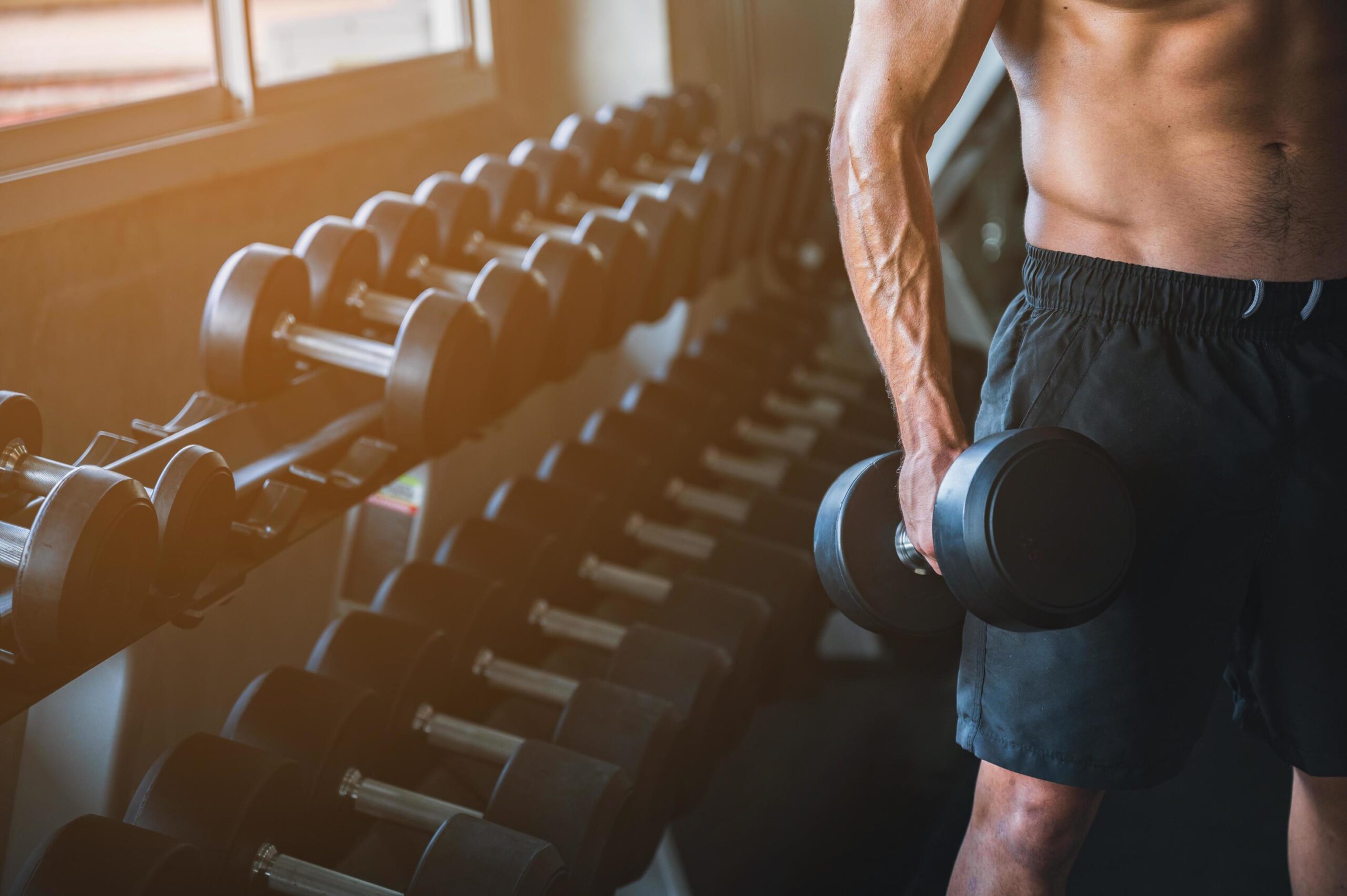

There’s a small moment that happens in almost every gym, usually around 6 p.m., when the good equipment is taken and the air feels slightly competitive. Someone is waiting for the cable station. Someone else is circling the squat rack like a patient predator. Meanwhile, off to the side, a set of dumbbells sits in a neat line, ignored—like the sensible option nobody wants to admit will work.
Dumbbells don’t look like much. They don’t clang with the authority of a barbell. They don’t come with pins, stacks, attachments, or screens. They’re just weight with a handle.
And yet: two dumbbells can replace an enormous portion of what people use “the gym” for—strength, muscle, conditioning, posture, even that feeling of leaving with your shoulders a little more square and your mind a little quieter.
That’s partly because dumbbells do something machines can’t: they ask your body to solve the movement, not just survive it. Your stabilizers wake up. Your left side is forced to admit it’s not as strong as your right. Your core has to participate, not just pose for a mirror.
The result is a kind of honest training—less theatrical, more transferable. It’s the difference between working out and building a body that can do things.
Below are eight dumbbell workouts that can replace half the gym. Each one is designed to be run at home, in a hotel, or in the one corner of a crowded weight room that still feels civilized. You’ll get strength, muscle, and conditioning with minimal equipment and maximal usefulness.
A note before we start: “Replace half the gym” doesn’t mean “every single machine is pointless.” It means most people can get most of what they want—fat loss, strength, muscle tone, durability, confidence—without needing a dozen stations and a complicated routine that collapses the minute a bench is taken.
How to choose weights (without turning it into a math class)
Pick dumbbells that make the last two reps of each set feel challenging but controlled. If your form falls apart or you’re holding your breath like you’re underwater, it’s too heavy. If you could keep going for eight more reps with perfect form, it’s too light—unless you’re doing high-rep conditioning, where “too light” sometimes becomes “perfect.”
If you have only one pair, don’t worry. You can create difficulty with tempo (slower lowering), pauses, extra reps, or shorter rest. A modest weight becomes plenty when you stop rushing.
Warm-up (five minutes, no drama)
Before every workout:
- 30 seconds of marching or light jumping jacks
- 10 bodyweight squats
- 10 hip hinges (hands on hips, push hips back)
- 10 arm circles each direction
- 5 slow push-ups on a bench or wall (or plank shoulder taps)
Now, the workouts.
1) The Full-Body “Big Five” Session
What it replaces: the classic gym day of machines for legs, back, chest, and core
Why it works: it hits the major movement patterns without overcomplicating your life
This is the workout you do when you want a reliable, repeatable session that makes you stronger everywhere. It’s boring in the best way. It’s a sturdy table.
Do this 2–3 times per week. Rest 60–90 seconds between sets.
- Dumbbell Goblet Squat — 3–4 sets of 8–12
Cue: Keep the weight close to your chest. Sit between your hips, not on top of your knees. - Dumbbell Romanian Deadlift — 3–4 sets of 8–12
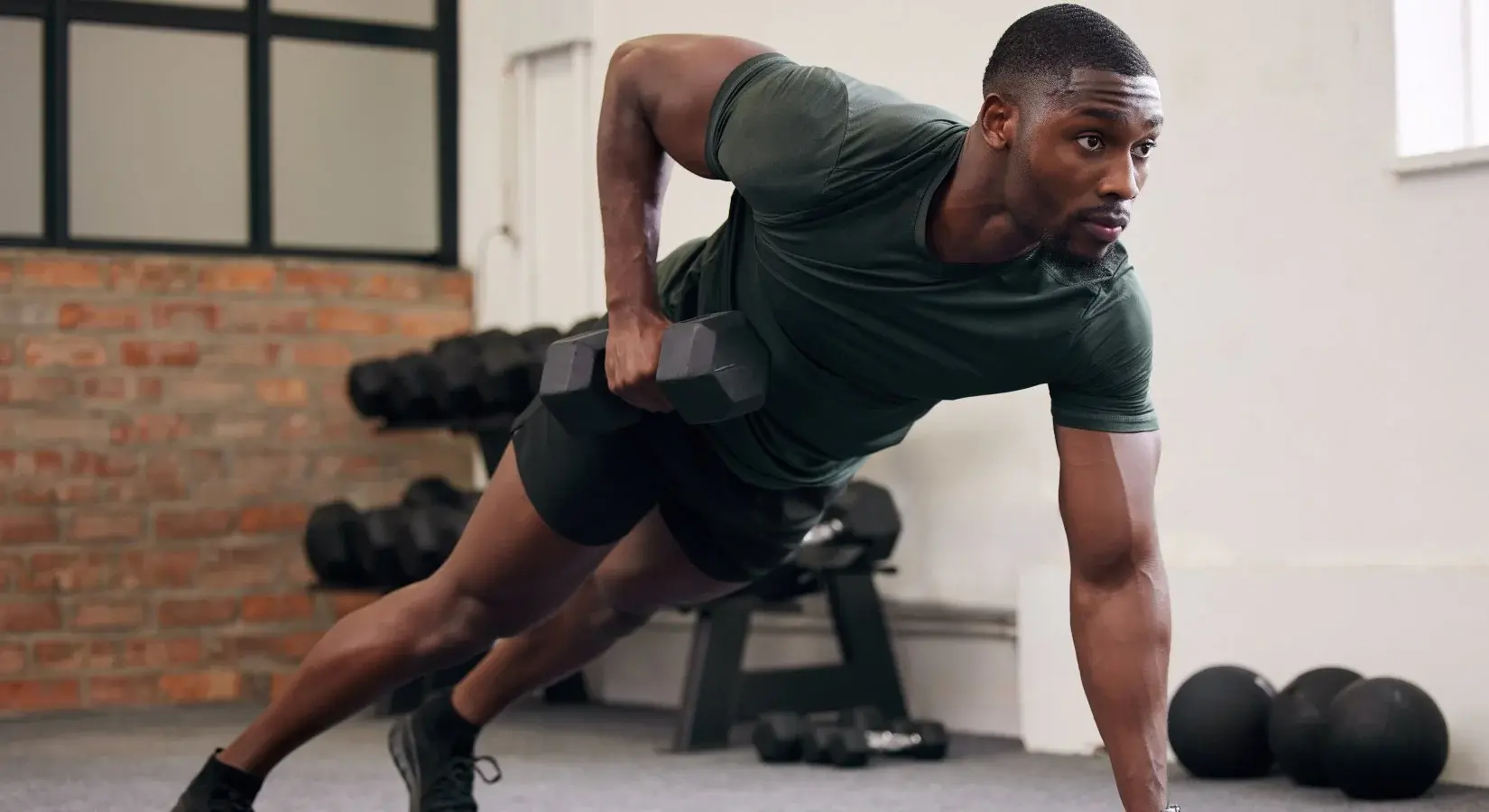
Cue: Hinge at the hips. Feel hamstrings stretch. Think “close the car door with your butt.” - One-Arm Dumbbell Row — 3–4 sets of 8–12 each side
Cue: Pull your elbow toward your back pocket. Don’t twist your whole torso. - Dumbbell Floor Press (or bench press if you have one) — 3–4 sets of 8–12
Cue: Control the lowering. Pause briefly on the floor if pressing there. - Suitcase Carry — 3 rounds of 30–60 seconds each side
Cue: Stand tall. Don’t lean away from the weight. Let your side body work.
Progression: Add one rep per set each week until you hit the top of the range; then bump the weight slightly and return to the lower end.
If you do nothing else but this workout for three months, you’ll be stronger and more athletic than most people who spend the same time wandering around a gym with a plan they can’t explain.
2) The Push-Pull Upper-Body Workout (That Fixes Posture)
What it replaces: chest press machines, lat pulldowns, shoulder machines, cable rows
Why it works: it balances the front and back of your upper body—without turning your shoulders into a complaint department
Many people train pushing far more than pulling. They do presses, push-ups, and then wonder why their shoulders feel tight and their neck feels like it’s doing unpaid overtime.
This workout makes pulling non-negotiable.
Do 3 rounds of the circuit below. Rest 60 seconds between movements if needed.
- Dumbbell Overhead Press — 8–10 reps
Cue: Ribs down. Don’t turn it into a standing backbend. - One-Arm Row — 10–12 reps each side
Cue: Pull shoulder blade back and down before you yank with your arm. - Dumbbell Incline Press (or floor press) — 8–12 reps
Cue: Keep wrists stacked. Slow on the way down. - Dumbbell Pullover — 10–12 reps
Cue: Think “long arms, controlled arc.” It’s for lats and ribcage control, not ego. - Lateral Raise — 12–15 reps
Cue: Raise with the elbows slightly bent, as if pouring water out of cans. - Rear Delt Fly — 12–15 reps
Cue: Soft knees, hinge slightly, move from the shoulder, not the lower back.
Progression: Add a round, add reps, or reduce rest. It’s not complicated. It’s just consistent.
3) The Lower-Body Builder (Leg Press Not Required)
What it replaces: leg press, leg extension, hamstring curl machines
Why it works: single-leg work builds strength, stability, and symmetry—the kind people think machines will give them
There’s a quiet truth: a lot of “leg day” machines exist because single-leg training is harder than it looks. Dumbbells let you do it anyway.
Do 3–4 sets of each move. Rest 60–90 seconds.
- Dumbbell Reverse Lunge — 8–10 reps each side
Cue: Step back far enough that your front shin stays mostly vertical. - Dumbbell Step-Up — 8–10 reps each side
Cue: Drive through the whole foot on the box. Don’t push off the ground leg. - Dumbbell Hip Thrust (upper back on a couch/bench) — 10–15 reps
Cue: Chin tucked, ribs down. Squeeze glutes at the top like you mean it. - Dumbbell Calf Raise — 12–20 reps
Cue: Full range. Pause at the top. Slow down.
Optional finisher:
- Wall sit — 2 rounds of 30–60 seconds
If you’ve always relied on machines to “feel” your legs, this will feel different at first. More honest. Less flashy. More effective.
4) The Dumbbell Complex (A Full Gym in 12 Minutes)
What it replaces: a long circuit across multiple stations, plus the treadmill you didn’t really want
Why it works: you get strength and conditioning without changing weights or leaving your square of floor
A complex is a sequence of lifts performed back-to-back without putting the dumbbells down. You’ll feel it quickly. It’s efficient, slightly rude, and surprisingly fun.
Pick a weight you can press for 8–10 reps when fresh. You’ll be humbled anyway.
Do 4–6 rounds. Rest 90 seconds between rounds.
One round:
- Dumbbell Romanian Deadlift — 6 reps
- Dumbbell Row — 6 reps each side
- Dumbbell Hang Clean — 6 reps
- Dumbbell Front Squat — 6 reps
- Dumbbell Push Press — 6 reps
- Dumbbell Reverse Lunge — 6 reps each side
Notes that save your back:
- Clean the dumbbells with hips, not arms.
- Keep reps crisp. If form turns sloppy, rest more or reduce weight.
This workout is what people mean when they say “I don’t have time.” It’s also what they mean when they say “I want to feel like I worked.”
5) The Core-and-Carry Session (Strong Without Crunches)
What it replaces: ab machines, endless sit-ups, and that vague sense of “I should train my core”
Why it works: it teaches your core to stabilize, resist rotation, and support your spine—the job it actually has
A strong core is not just visible. It’s functional. It’s the reason your back feels better. It’s the reason your lifts go up. It’s also the reason you can carry groceries without looking like you’re auditioning for a tragedy.
Do 3 rounds. Rest as needed.
- Suitcase Carry — 45–60 seconds each side
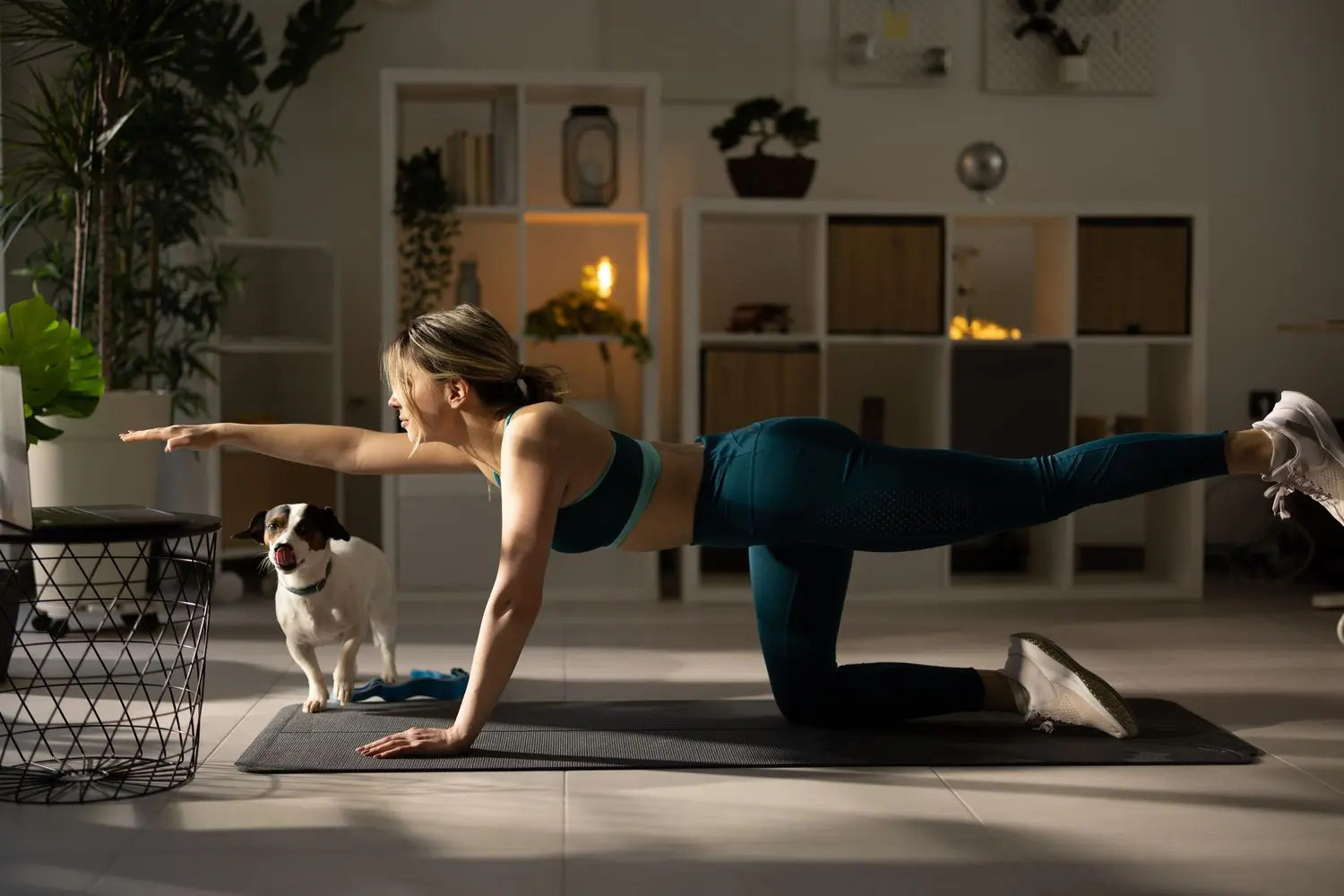
- Dumbbell Dead Bug (hold one DB over chest) — 8 reps each side
Cue: Lower with control. Keep your ribs from flaring. - Dumbbell Plank Drag (drag DB side to side) — 8–12 total drags
Cue: Hips steady. Move slowly. - Dumbbell Farmer Carry (two DBs) — 45–60 seconds
Cue: Walk tall, shoulders down, no rushing. - Half-Kneeling Dumbbell Press — 8–10 each side
Cue: Squeeze the glute of the knee-down side; keep torso stacked.
This is a workout that makes you feel sturdy—like your body is a single unit, not a loose collection of parts.
6) The “Hotel Room” Workout (Quiet, Minimal, Real)
What it replaces: the excuse that travel makes consistency impossible
Why it works: it’s simple, repeatable, and doesn’t depend on perfect conditions
This one is designed for small spaces and limited gear. It’s also a good “restart” workout when motivation is low.
Set a timer for 20 minutes. Move steadily.
Alternate these two blocks:
Block A (6–8 minutes):
- Dumbbell Goblet Squat — 10 reps
- Dumbbell Row — 10 reps each side
- Push-up (hands on bed if needed) — 8–12 reps
Block B (6–8 minutes):
- Dumbbell RDL — 10 reps
- Dumbbell Overhead Press — 8–10 reps
- Hollow Hold or Forearm Plank — 30–45 seconds
Repeat A and B until time is up.
If you’re the kind of person who falls off a plan because your environment changes, this workout is your antidote. It reminds you: you are not at the mercy of perfect circumstances.
7) The Hypertrophy “Pump” Workout (For People Who Like to Feel It)
What it replaces: cable flys, machine curls, triceps pushdowns, a lot of bodybuilding-style stations
Why it works: it emphasizes time under tension and local fatigue—the classic recipe for muscle growth
Some people love training because it feels good: the pump, the burn, the sense of fullness in a muscle that says, Yes, you did something today.
This workout delivers that without needing a jungle gym of attachments.
Do 3 rounds. Rest 45–75 seconds between movements.
- Dumbbell Chest Press — 10–12 reps
- Dumbbell Fly (Floor Fly) — 10–12 reps (light)
- Hammer Curl — 10–15 reps
- Overhead Triceps Extension — 10–15 reps
- Lateral Raise — 12–20 reps
- Biceps “21s” (7 bottom half, 7 top half, 7 full) — 1 set
Make it better with tempo:
Lower for a slow count of three on presses and curls. Muscle responds to attention.
This is the workout that makes a pair of dumbbells feel like a full gym membership—minus the waiting.
8) The Strength-Endurance EMOM (Structure Without Boredom)
What it replaces: a cardio machine plus a scattered “I’ll do some weights too” session
Why it works: EMOMs create urgency, but with boundaries—so you train hard without turning it into chaos
EMOM means “Every Minute On the Minute.” At the start of each minute, you do the work. The rest of the minute is your rest. It’s tidy. It’s honest. It also forces you to choose weights that are challenging but sustainable.
Set a timer for 16 minutes.
Rotate through these four minutes, four times:
- Minute 1: Dumbbell Thrusters — 8 reps
(front squat into press) - Minute 2: Dumbbell Rows — 10 reps each side (or 12 total if both arms together)
- Minute 3: Dumbbell RDL — 10 reps
- Minute 4: Dumbbell Russian Swings — 15 reps
(hinge-driven, not a squat; stop if your back disagrees)
Scaling options:
- Reduce reps to keep 15–25 seconds of rest each minute.
- Swap swings for fast suitcase carries if your back is sensitive.
This is the workout for people who want structure but hate long sessions. It finishes quickly, leaves you breathless, and—importantly—makes you feel capable.
How to use these workouts (so you actually get results)
If you try all eight randomly, you’ll be entertained. If you run them with a little intention, you’ll change your body.
Here are three simple ways to program them:
Option A: The “3 Days a Week” Plan (Busy, realistic)
- Day 1: Full-Body Big Five
- Day 2: Lower-Body Builder + Core-and-Carry
- Day 3: Push-Pull Upper + EMOM finisher (8–12 minutes)
Option B: The “4 Days a Week” Plan (More muscle, still sane)
- Day 1: Full-Body Big Five
- Day 2: Hypertrophy Pump
- Day 3: Lower-Body Builder
- Day 4: Dumbbell Complex or EMOM
Option C: The “I Need Variety” Plan (Without losing progress)
Rotate any two strength-focused workouts (Big Five, Push-Pull, Lower-Body) with one conditioning workout (Complex, EMOM, Hotel) each week.
Progress without obsession
Pick one marker to improve each week:
- 1–2 more reps per set, or
- slightly heavier dumbbells, or
- 10–15 seconds less rest, or
- one extra round
The body does not require novelty. It requires a reason to adapt.
A few cues that keep dumbbell training safe and effective
- Own the lowering. Most injuries happen when people rush the eccentric (the lowering phase). Slow down.
- Keep weights close. Dumbbells that drift away from your body turn into a lever. Levers are harder on joints.
- Breathe like you mean it. Exhale during effort; don’t clamp down and turn red unless you’re intentionally bracing for heavy strength work.
- Stop chasing soreness. Soreness is not proof. Progress is proof.
- Leave one rep in the tank—often. Especially if you’re training frequently. Consistency beats collapse.
The quiet promise of dumbbells
There’s something reassuring about a tool that doesn’t pretend to be smarter than you. Dumbbells don’t congratulate you. They don’t track your reps. They don’t distract you with complexity. They simply ask: can you move well, repeatedly, under load?
And if you can, you don’t need half the machines people queue for. You don’t need an elaborate circuit that depends on perfect timing and empty equipment. You need a small collection of movements you can perform with care—and return to often enough that your body begins to trust you.
That trust is the real upgrade. Not access. Not novelty. Not even motivation.
Just the calm power of doing the work, in a way you can repeat.







 Sign In