

Most nights, sleep doesn’t collapse because you forgot to buy a better pillow. It collapses because your nervous system never got the memo that the day is over.
We live like we’re perpetually on call — for work, for family, for the news, for the bright rectangle in our hands that insists on one more scroll. Then we expect the body to switch gears on command: Now be calm. Now be still. Now be unconscious.
If that were easy, the “sleep tips” industry wouldn’t exist.
Yoga won’t fix every sleep problem. Chronic insomnia can be complicated. Anxiety, depression, medications, hormones, pain, alcohol, late caffeine, sleep apnea — all of it matters. But gentle yoga does something quietly powerful: it gives the body a physical way to downshift. It tells your muscles to stop bracing. It signals safety. It slows the breath. It creates a small ritual that’s not another productivity hack, just a soft boundary between the day you had and the night you want.
What follows is a simple sequence of nine yoga poses designed to help you sleep better tonight — not by forcing relaxation, but by inviting it. These poses are slow, supported, and intentionally unambitious. There’s no achievement here. You’re not “winning” bedtime.
You’re easing into it.
A note on safety: If you have glaucoma, uncontrolled high blood pressure, severe reflux, recent surgery, or pregnancy, some shapes (especially legs-up-the-wall or deep forward folds) may need modifications. Move gently, and skip anything that feels sharp, dizzying, or wrong. If you have persistent sleep trouble, talk with a clinician.
How to Use This Sequence (So It Actually Helps)
- Do it 30–60 minutes before bed. Right before sleep is fine too, but give yourself a little transition time if possible.
- Dim the lights. Your nervous system is not subtle.
- Keep it slow. If you’re sweating or striving, you’ve changed the assignment.
- Breathe through your nose if comfortable, and aim for an exhale that is slightly longer than the inhale.
- Use props: a pillow, a folded blanket, a couch cushion, a wall. Comfort isn’t cheating; it’s the point.
If you only do two poses, do the last two. If you do all nine, move through them in order like a gentle story with a predictable ending.
1) Child’s Pose (Balasana)
Why it helps:
Child’s Pose is a nervous-system exhale. It gently rounds the back, softens the belly, and gives your forehead a place to rest — which can feel strangely reassuring, like your body is being told, “You can put the weight down now.”
How to do it:
Kneel on the floor. Bring big toes together, knees apart (or together if that’s more comfortable). Fold forward, letting your torso rest between your thighs. Extend arms forward or place them by your sides.
Make it more sleep-friendly:
Put a pillow or folded blanket under your chest or forehead, especially if your hips don’t comfortably reach your heels.
Stay for: 1–2 minutes, breathing slowly.
If it’s not comfortable:
Try a supported child’s pose with your torso on a bed or couch, or skip to Pose 2.
2) Cat-Cow (Marjaryasana–Bitilasana)
Why it helps:
Your spine holds the day. Cat-Cow is a simple way to unstick the places that get locked into “screen posture” — the rounded upper back, the tight hips, the stiff neck. It’s also rhythmic, which is one of the body’s favorite languages.
How to do it:
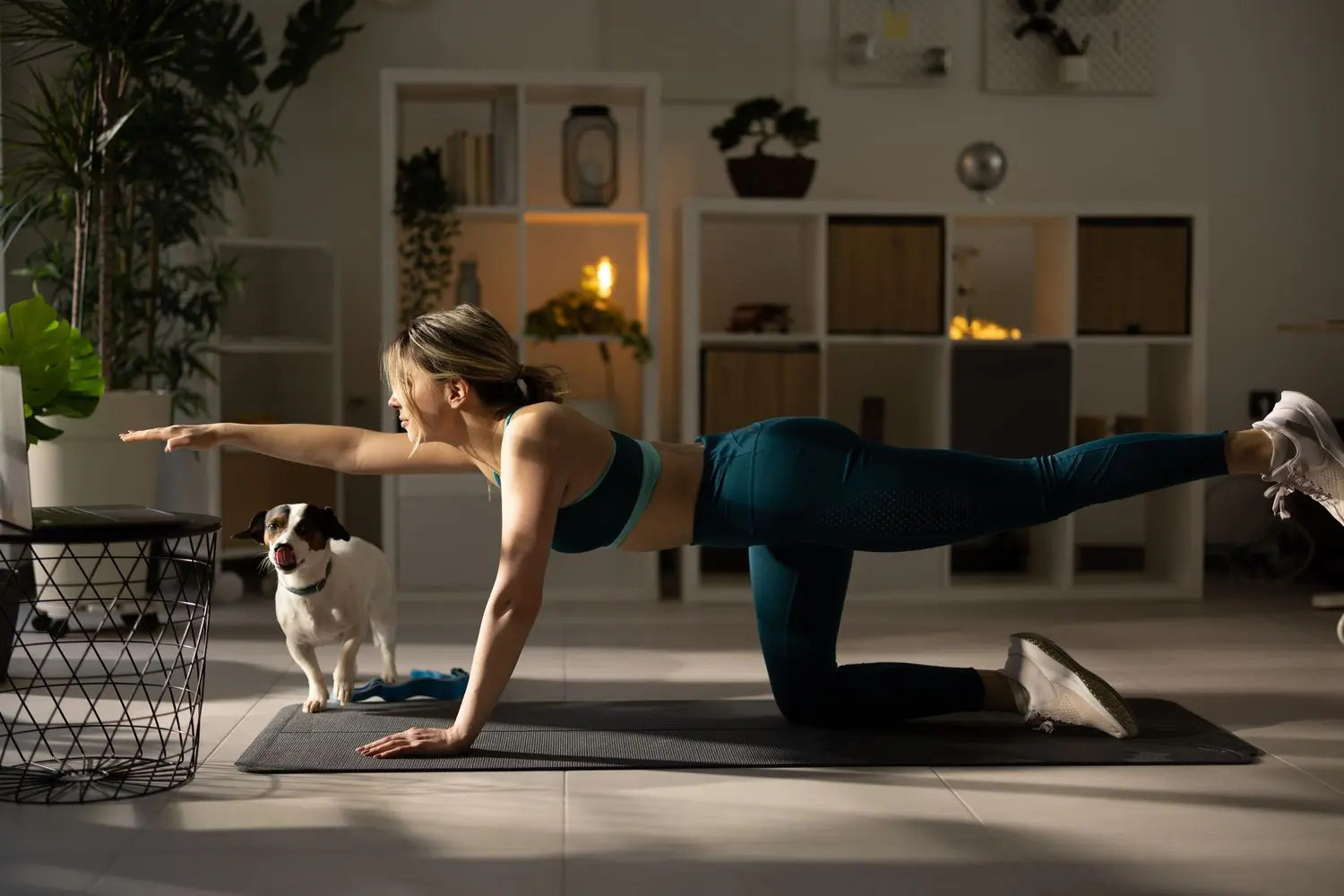
Come to hands and knees. On an inhale, arch your back gently, lift your chest, and look slightly forward. On an exhale, round the spine, tuck the chin, and gently draw the belly in.
Sleep version:
Keep it small. You’re not trying to create a dramatic shape; you’re trying to create ease.
Do: 6–10 slow rounds of breath.
3) Seated Forward Fold (Paschimottanasana), Soft Edition
Why it helps:
Forward folds tend to quiet the nervous system — the body’s posture becomes less “alert” and more “rest.” But for sleep, this isn’t about touching your toes. It’s about surrendering tension without yanking on hamstrings.
How to do it:
Sit with legs extended. Bend your knees as much as you need. Fold forward from the hips, letting your spine soften. Rest your hands on your legs, ankles, or a pillow.
Make it more sleep-friendly:
Put a rolled blanket under your knees and a pillow on your thighs so your torso can rest.
Stay for: 1–2 minutes.
If your back complains:
Sit on a folded blanket to tilt the pelvis forward gently, or skip it.
4) Supine Figure Four (Reclined Pigeon)
Why it helps:
The hips are where many people store stress and sitting-related tightness. This shape releases the outer hip and glutes — often a sneaky contributor to low-back discomfort at night.
How to do it:
Lie on your back. Cross your right ankle over your left thigh, creating a “4” shape. Either stay there or thread your hands behind your left thigh and gently draw the legs toward you.
Keep it gentle:
Flex the right foot to protect the knee. If you feel knee pain, back off.
Stay for: 1–2 minutes each side.
5) Supine Twist (Supta Matsyendrasana)
Why it helps:
Twists can feel like wringing out the day — not in a dramatic, detox kind of way, but in a “my spine can breathe again” way. The twist also encourages slower breathing, especially if you let your exhale do the work.
How to do it:
Lie on your back. Hug knees into chest. Drop both knees to one side, keeping shoulders heavy. Extend arms in a “T.” Turn your head the opposite direction if it feels good — or keep your neck neutral.
Make it more sleep-friendly:
Place a pillow or folded blanket under your knees so they fully rest.
Stay for: 1–2 minutes each side.
6) Legs Up the Wall (Viparita Karani)
Why it helps:
This is one of the best “I’m done for the day” poses. It can help relieve heavy legs, encourage venous return, and generally shift the body into a more restful state. It’s also deeply passive — which is why it works.
How to do it:
Sit sideways next to a wall. Swing your legs up as you lie back. Your hips can be close to the wall or a few inches away — whatever feels comfortable.
Modify it:
If hamstrings tug, scoot farther from the wall and bend knees slightly. Put a pillow under your head or a folded blanket under your hips.
Stay for: 3–10 minutes.
Skip if:
You have certain eye conditions (like glaucoma) or it worsens reflux — in that case, try Pose 7 and 9 instead.
7) Supported Bridge (Setu Bandha Sarvangasana), Resting Version
Why it helps:
Supported Bridge is an invitation for the front body to soften. It gently opens the chest and hip flexors — two areas that tighten after a day of sitting — without requiring effort.
How to do it:
Lie on your back with knees bent. Lift hips slightly and slide a yoga block, firm pillow, or folded blanket under your sacrum (the flat part of your pelvis, not your lower back). Let your weight sink into the support.
Keep it restful:
If you feel strain, lower the height of the support.
Stay for: 1–3 minutes.
8) Reclining Bound Angle (Supta Baddha Konasana)
Why it helps:
This is a pose that says, “You don’t have to hold yourself together so tightly.” It releases the inner thighs and hips and creates a sense of spaciousness in the belly and chest. Many people find it emotionally soothing, even if they can’t explain why.
How to do it:
Lie on your back. Bring the soles of your feet together and let your knees fall open. Place hands on your belly or by your sides.
Make it supported:
Put pillows or folded blankets under each knee so your hips can truly rest. If your inner thighs feel like they’re working, add more support.
Stay for: 2–5 minutes.
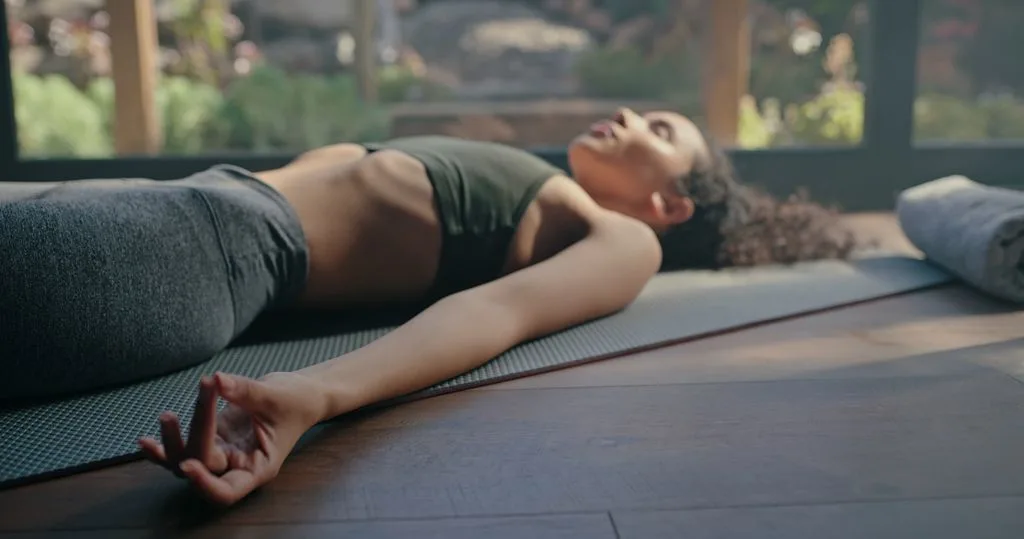
9) Savasana (Final Rest), With a Sleep-Friendly Twist
Why it helps:
Savasana is not “doing yoga.” It’s practicing not doing. For sleep, it can be the most important part: a controlled stop.
How to do it:
Lie on your back with arms relaxed, palms up. Let feet fall outward. Place a pillow under your knees to ease the lower back. Use a light blanket over your body — the gentle weight can be calming.
Add breath, gently:
Try this for 2 minutes: inhale for a count of 4, exhale for a count of 6. Don’t force the count if it feels stressful; the idea is simply a longer exhale.
Stay for: 3–10 minutes — or until you drift.
If you don’t love lying flat:
Lie on your side in a fetal position with a pillow between your knees (a “side savasana”). Many people sleep better this way.
A Simple 10–15 Minute Bedtime Flow (If You Want It)
If you prefer a clean plan rather than options:
- Child’s Pose — 1 minute
- Cat-Cow — 8 breaths
- Supine Figure Four — 1 minute each side
- Supine Twist — 1 minute each side
- Legs Up the Wall — 3 minutes
- Reclining Bound Angle — 2 minutes
- Savasana — 3–5 minutes
That’s it. No heroics.
Why This Works (Without Making Grand Claims)
Sleep is not just a switch; it’s a state. And the body enters that state more easily when it receives consistent cues: dim light, quiet, slower breathing, a gentle lowering of muscular tone.
These poses do a few practical things:
- They downshift breathing. A longer exhale tends to support relaxation.
- They reduce “holding patterns.” Many people clench without knowing it — jaw, shoulders, hip flexors.
- They ease physical discomfort. Tight hips and a stiff spine can make it harder to get comfortable in bed.
- They create a ritual. Ritual matters because the brain likes predictable endings.
None of this is a guarantee. But it’s a reasonable, low-risk experiment — and sometimes that’s exactly what a restless mind needs: something gentle to do, so it can stop trying to solve the night.
Small Things That Make This Even Better Tonight
If you want to stack the deck in your favor:
- Keep your phone across the room during this sequence. Even “just checking” is a stress test.
- Warm the room slightly, then let it cool. A small drop in temperature can help cue sleep.
- Sip something non-caffeinated (herbal tea, warm water) if it feels comforting.
- If your mind races, write one list. Not a journal. Just a short list of “tomorrow tasks,” so your brain stops rehearsing them.
And if you do this sequence and still can’t sleep tonight, you haven’t failed. You’ve still done something useful: you’ve told your body the truth. The day is over. You’re allowed to rest.






 Sign In